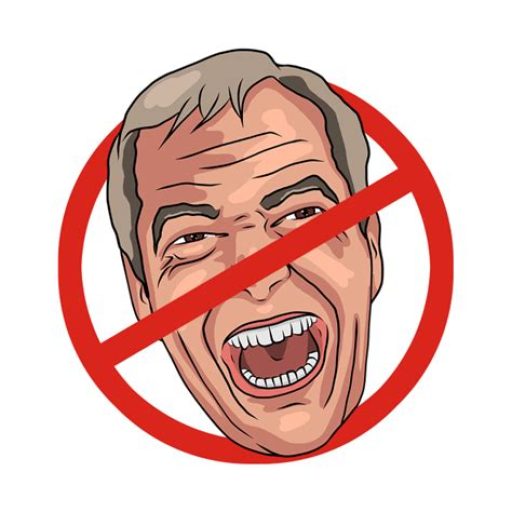
RUK plans to reshape the state, with political appointments replacing senior civil servants; scrapping the ECHR and Equality Act; abolishing the Lords; undermining the BBC, appoint Cabinet ministers who aren’t MPs. These would significantly expand executive power and weaken checks and balances.
Danny Kruger’s war on Whitehall
Danny Kruger has emerged as the main architect of Reform UK’s most radical policy programme to date, reflecting his post-liberal, Christian-inflected conservatism. A former Tory MP who defected to Reform, Kruger argues Britain is in moral and civic decline and needs a smaller, more disciplined state. At a press conference, he set out plans to rewrite the ministerial and civil service codes, removing the obligation for ministers to consider international law and bringing civil servants more tightly under political control. He proposed appointing half of ministers from outside Parliament, cutting the civil service by at least 30 per cent, and closing major government offices. Kruger also attacked what he calls Whitehall’s “DEI/woke agenda,” framing cultural battles as a religious conflict. Joined by fellow post-liberal James Orr, he aims to transform Reform from a populist “pirate ship” into a government-in-waiting with legislation ready if it wins power, centralising authority and rolling back the modern liberal state.
Reform UK’s failure to resolve economic challenges will result in the party increasing scapegoating minorities
If Nigel Farage’s Reform Party comes to power, it will likely repeat the global pattern of populist governments that win on public anger but struggle once faced with structural economic problems. Leaders across the spectrum: Labour, Rishi Sunak, Donald Trump, Joe Biden, have inherited worsening inequality, falling living standards, and housing pressures. When such governments fail to deliver real economic improvements, they often turn to symbolic politics and scapegoat vulnerable groups. Reform would begin by targeting illegal migrants and asylum seekers, then potentially broaden blame to legal migrants if economic frustrations mount. Division serves the wealthy, who continue to accumulate power as most people struggle. Inequality needs to be addressed directly, but a Reform government will not do this so will lead to deeper polarization and policy failure.
In July 2025, RUK MP Sarah Pochin framed acts of violence against minorities in Northern Ireland and England as justified warnings, signaling tacit support for terrorism.
Far-right parties policies including restricting asylum rights, seizing refugees’ valuables, expanding detention, and fast-tracking deportations, are all designed to signal cruelty rather than solve social problems. This “welfare chauvinism” panders to resentment without benefiting citizens. This competitive harshness normalizes authoritarianism, empowers far-right parties like Reform UK, and will ultimately harm society unless a left-wing realignment challenges both Labour’s compliance and the ruling class’s agenda.
Take away our human rights
Nigel Farage’s focus isn’t truly immigration or Europe, it’s the European Convention on Human Rights, which he undermines by scapegoating migrants. By turning complex legal protections into simplistic symbols, he diverts public attention from systemic inequality, manipulating fear and hatred to consolidate support while threatening fundamental rights and freedoms.
Reform UK using the ‘immigration crisis’ as a justification to withdraw from the European Convention on Human Rights, rejecting key principles of liberal democracy. In the same way that Brexit enabled the Tories to start removing all worker rights, leaving the ECHR would allow an authoritarian government in the future to remove all human rights from those living in Britain. To read the human rights in ECHR go here.
- Farage wants to replace the Human Rights Act with a “British Bill of Rights,” removing the link to the European Court of Human Rights.
- The Human Rights Act incorporates post-WWII human rights protections, originally championed by the UK, to prevent government abuse.
- Farage’s proposal would narrow rights—especially for migrants, asylum seekers and anyone with potential dual nationality.
- It would shift power from independent courts to Parliament, weakening oversight and international accountability.
- This would let any future government restrict or remove rights at will, threatening universal protections.
- The change could undermine the Northern Ireland peace settlement and international agreements relying on shared human-rights standards.
- Opponents say this path mirrors authoritarian or fascist approaches by classifying some people as less deserving of rights.
- The proposal risks eroding rights for millions, not just migrants, including people with foreign-born parents or grandparents.
http://www.taxresearch.org.uk/Blog/2025/08/30/what-farages-british-bill-of-rights-really-means/
It October 2025, Nigel Farage rose in Parliament to push a bill that would have taken the UK out of the European Convention on Human Rights if it had passed, but he was defeated. Farage used misleading claims and nationalist rhetoric, ignoring the ECHR’s post-WWII role in preventing abuses such as torture, arbitrary detention, slavery, and unlawful killing. The ECHR protects people in the UK and is vital to the Good Friday Agreement. Farage’s real aim is to weaken asylum protections after courts blocked cruel policies like the Rwanda scheme.
Crush protests and dissent
Many of the Reform UK policies are unpopular such as the mass deportation regime, and could face largescale protests. A plan that would very likely require the same kind of invasive surveillance, state violence, and authoritarian suppression of dissent. If RUK were in power would they hesitate to crush protests that stood in their way? We can see from Farage’s public statements that he dislikes protesters and blames teaching unions and universities.
 STOP REFORM UK