
Reform UK’s Misogynistic Policy Proposals
Ending Gender Equality in the Workplace: Reform UK has pledged to replace the Equality Act 2010, which British PM Keir Starmer called “shocking” and “unBritish”. They aim to remove diversity, equality, and inclusion (DEI) regulations, which critics argue threatens, among other things, pay equality protections.
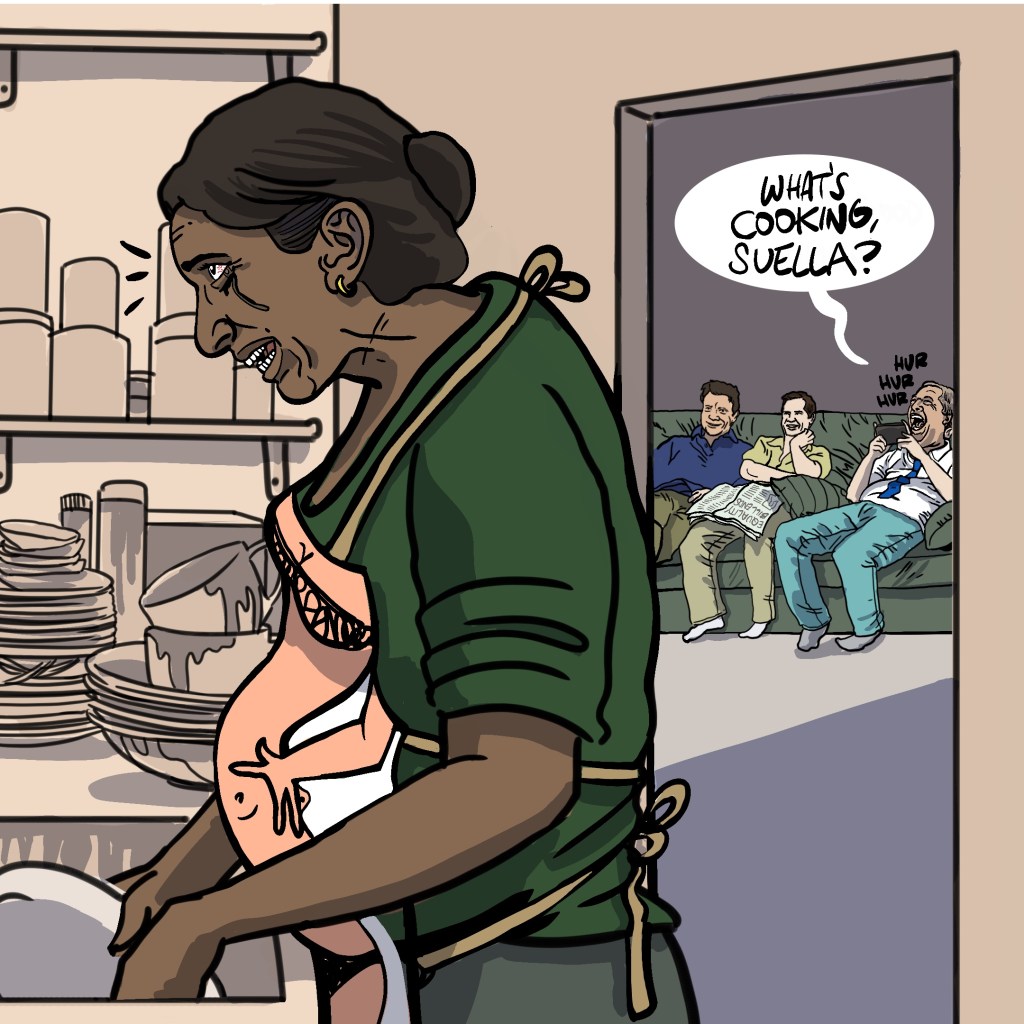
The twice-sacked Reform UK defector and OG poster girl for acting against her own interests, Suella Braverman, is RUK’s spokesperson for education, skills and equalities. She proudly said that on her first day in government she would abolish her own equalities brief and repeal the Equality Act.
A Return to Outmoded Family Values and Society: The party is promoting a more traditional 1950s-style family model, with some candidates suggesting women should prioritize motherhood over careers and expressing concern over declining birth rates.
The Reform UK candidate for the Gorton and Denton byelection, Matthew Goodwin, called for childless women to be taxed more with a “negative child benefit tax” on “those who don’t have offspring”, and “remove personal income tax for women who have two or more children”. He also wants to fewer women in higher education.
Reform UK support undermining the new grooming gangs inquiry
Reform UK has faced criticism for undermining the 2025 grooming gangs inquiry, with the party and some Conservative figures accused of preferring the inquiry to stall or fail, prioritising political chaos over protecting victims. Historically, far-right actors have focused on ethnicity rather than safeguarding abuse survivors.
Reform UK unapolgetically sidelines women
The party also lacks substantive policies for women. Social media exchanges highlighted that Reform’s manifesto mentions women only in the context of service roles and offers no protections against violence or support for girls and women. Critics note that many supporters, particularly men, fixate on immigration and far-right ideas, revealing the party’s limited appeal beyond exploiting fear and resentment.
A woman named Eevee asked Reform UK supporters a simple question on social media: If you’re a woman who supports Reform, can you explain why without mentioning immigrants or people of colour?
Many Reform supporters reacted angrily — and most who replied were men, who either dodged the question or insisted that immigration is the root of every problem, from the budget deficit to housing to crime.
When Eevee explained that she was asking specifically about women because Reform has no real policies to protect women and girls, critics accused her of being “feminist,” “thick,” or limiting debate. She pointed out that Reform’s manifesto mentions women only three times — all referring to servicewomen — and contains no policies addressing violence, safety, or support for women and girls. She also noted that Reform MPs regularly vote against protections for women and other vulnerable groups.
Some responses openly embraced far-right ideas, talking about “ethnic replacement” and longing for a “white country,” reinforcing Eevee’s point that many supporters focus almost entirely on immigration.
Eevee concluded that the anger at her question was revealing: if immigration is the only reason many people vote Reform, it’s fair to ask what else the party offers — especially to women — beyond exploiting fear and resentment.
Abortion rights
Reform UK’s rising influence is raising concerns about potential threats to abortion rights in Britain, despite broad public support for reproductive freedom. Reform UK has indicated a desire to restrict abortion rights, with representatives calling the current 24-week limit “utterly ludicrous”.
The party’s ties to American Christian nationalist groups, including the appointment of ex-Trump adviser Professor James Orr, suggest a shift toward ultra-conservative social policies. While Nigel Farage claims to be pro-choice, he criticizes current abortion limits and aligns with US conservative rhetoric, opposing clinic buffer zones. Activists warn that well-funded, coordinated anti-abortion groups are seeking to influence UK politics, using divisive issues like immigration to normalize extreme policies, highlighting the need to scrutinize Reform’s leadership and agenda.
 STOP REFORM UK