International Factors
- Economic factors: there has been economic instability since the 2008 financial crisis and the covid pandemic resulting in living standards declining and the cost of living crisis.
- Immigration: An increasingly unstable world has resulted in increased immigration which has been weaponised by the far-right as a cause for these problems.
- Social media impact: this has resulted in increased online disinformation by actors hostile to the liberal democratic post-war order.
- Liberal centrist politics and its institutions are now seen by many as failures or even complicit in western nations decline.
- Many voters feel abandoned by the traditional parties resulting in disillusionment in these parties so are open to supporting more extreme parties.
UK Political Factors
- Tory failure – a clear majority of the country view the Tories 14 years in power as a total failure. The last parliament saw political chaos, living standards drop which is unknown in living memory, the collapse of public services and the costs of living crisis.
- Labour were elected as a clear rejection of the Tories.
- They have a huge majority of seats in parliament but a low level of support in the country.
- The Labour government and Starmer are not popular due to introducing several unpopular policies.
- Their economic policies are aiming to increase economic growth by the end of the parliament to improve voters’ standards of living.
- They are also investing in the NHS to rebuild it.
- Labour are introducing other policies to make people’s lives better but their communications are terrible resulting in an anti-Labour narrative forming.
- Fingers crossed but will this be enough to stop Reform UK?
- Reform UK feeds on the failure and unpopularity of the Tories and Labour. The outcome of the next general election in 2028 or 2029 is based on:
- international factors outside of Labour control, and
- Reform’s effectiveness,
- the Labour government’s ability to improve people’s lives. We have to hope they succeed but it is far from certain.
Reform UK is Actively Promoted by the UK Media
- The UK broadcast media normalisation of Reform UK’s ideology that has made the party’s far-right, dangerous ideology more acceptable to voters.
- Most of the UK mainstream broadcasting media treat Reform UK as a legitimate political party and give it a platform to spread its divisive and hateful views.
- For years, Reform has been treated as a protest party. Its policies and announcements have largely avoided full public scrutiny, while the media has wheeled out Farage and his colleagues time and again as colourful commentators and talking heads, giving them undue credibility in the name of balance and a hugely disproportionate platform to set the stage of debate.
- The media also fail to challenge Reform UK or hold it to account for its views.
- Since the 2010s, the BBC has had Farage on BBC Question Time more than nearly any other guest.
- Journalists give Farage a platform to spread disinformation so they can get clicks and maintain audience numbers.
- Reform UK are promoted heavily by right-wing channels such as GB News and Talk TV in their broadcasts and on social media.
- Farage’s high-profile media presence, particularly on platforms like GB News, allowed him to retain a significant level of influence, even as his political party remained marginal.
- GB News is not neutral when it comes to political coverage. Their stance is notably negative about Labour and Keir Starmer, but they balance this with strong support for Reform UK. This creates an echo chamber for the Reform UK message, reinforcing their presence in the media to an exaggerated degree.
- Reform receives positive coverage in the right-wing newspapers such as the Daily Express, Daily Mail, The Sun, The Telegraph and The Times.
- Reform get disproportionate coverage compared to Lib Dems and Greens which are left out of the media conversation despite a solid presence in Parliament.
- The Lib Dems, despite being the third-largest party in terms of MPs, were almost entirely ignored in the media landscape especially by The Times, Talk TV, and The Telegraph.
- The Green Party, with four MPs, are also mostly ignored
(Sources: https://archive.ph/hOIAu, https://www.youtube.com/watch?v=XpIsUuFV91c, https://bylinetimes.com/2023/12/20/is-the-media-helping-richard-tice-sanitise-far-right-responses-to-immigration/, https://www.youtube.com/watch?v=K0-nYvKW7SI, https://bylinetimes.com/2025/02/17/how-the-media-and-musk-are-boosting-nigel-farages-reform-uk-well-beyond-its-size/, https://bylinetimes.com/2024/02/27/green-party-is-battling-for-fair-coverage-as-media-relies-on-shock-factor-of-reform-uk-leaders-say/)
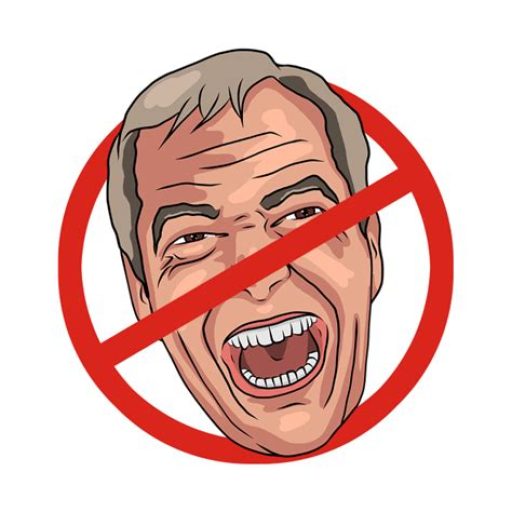
 STOP REFORM UK